
Minimally Invasive Hip Replacement
-
Trevor Stefanski, MD Specializing in Rapid Recovery Joint Replacement
Dr. James Trevor Stefanski is a fellowship-trained and board certified joint replacement specialist in Cincinnati, Ohio, specializing in minimally invasive, muscle-sparing joint replacement of the hip, knee, and shoulder.
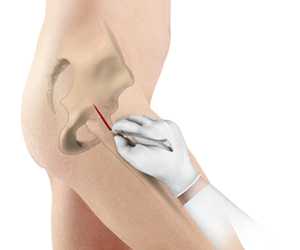
At Modern Orthopedics in Cincinnati, fellowship-trained orthopedic surgeon Dr. Trevor Stefanski performs minimally invasive anterior hip replacement—a muscle-sparing approach that focuses on protecting healthy tissue rather than simply reducing incision size. By avoiding tendon detachment and working between natural muscle planes, this advanced technique preserves strength, reduces pain, and allows patients to recover faster with greater confidence. Dr. Stefanski’s method is built on three pillars: Preservation of healthy tissue, Restoration of damaged joint surfaces, and Personalization of each patient’s anatomy.
What Is a Minimally Invasive Anterior Hip Replacement?
The anterior approach to hip replacement allows your surgeon to access the joint through a small incision at the front of the hip, using a natural pathway between muscles. Unlike traditional techniques that detach and later repair muscles or tendons, this approach minimizes trauma to the surrounding tissue. The result is faster mobility, less pain, and a smoother recovery. At Modern Orthopedics, this approach is part of a larger commitment to motion-preserving, patient-specific joint replacement.
The Real Meaning of “Minimally Invasive”
While many people associate minimally invasive surgery with smaller scars, the true advantage lies beneath the skin. A smaller incision is a visible benefit, but the real value of minimally invasive anterior hip replacement is how it spares healthy muscle and tendon structures. Traditional posterior or lateral approaches may require detaching tendons to reach the hip joint—these must then be repaired, adding time and discomfort to recovery. The anterior approach uses an interval between muscles, meaning no tendons are cut or repaired. This minimizes bleeding, swelling, and long-term weakness.
Muscle and Tendon Preservation
Preserving the body’s natural strength is the foundation of Dr. Stefanski’s surgical philosophy. By maintaining the attachments of the hip flexors, abductors, and rotators, the minimally invasive anterior hip replacement preserves the stabilizing structures that make walking and balance possible. Patients often stand and walk the same day as surgery with minimal restrictions. Because tendons are not detached, there’s no need to wait for muscle repair to heal before regaining motion—helping patients return to daily life with confidence and independence.
Restoration of Damaged Joint Surfaces
Once the hip is accessed through this muscle-sparing pathway, the focus turns to restoring the damaged joint itself. Using precision tools and digital guidance, Dr. Stefanski removes arthritic bone and cartilage and replaces them with implants that recreate the natural curvature and depth of your hip. This anatomical restoration restores smooth motion and reduces the risk of leg-length differences, instability, or limp. Every step of the procedure is performed with millimeter-level precision to ensure the hip feels natural and balanced.
Personalization: Recreating Your Unique Hip Anatomy
No two hips are identical. Personalization is the third pillar of Dr. Stefanski’s minimally invasive philosophy. By assessing leg length, offset, and joint rotation in real time, each anterior hip replacement is tailored to match your natural anatomy. This ensures balanced muscle tension, symmetrical motion, and long-term comfort. Patients often describe their new hip as feeling like their own—just pain-free.
Benefits of Minimally Invasive Anterior Hip Replacement
- No tendon detachment or muscle cutting
- Smaller incision with less soft-tissue trauma
- Faster return to walking—often same day
- Lower risk of hip dislocation
- Less pain, bleeding, and swelling
- More natural movement and stability
- Performed by a fellowship-trained orthopedic surgeon in Cincinnati
Recovery and Expectations
Most patients walk the same day as surgery and return to light daily activities within a few weeks. Because no tendons are detached, traditional hip precautions are usually unnecessary. Recovery focuses on motion, strength, and confidence rather than prolonged restrictions. Many patients find they are driving, climbing stairs, and sleeping comfortably within just 1-2 weeks following minimally invasive anterior hip replacement.
Frequently Asked Questions
- How long is recovery after minimally invasive anterior hip replacement? Most patients return to normal activities within 2-6 weeks depending on your activity goals, thanks to preserved muscles and tendons.
- Will I need Physical Therapy after hip replacement? With this advanced approach, many people have reduced need for physical therapy. In many cases, the need for formal physical therapy is completely eliminated by using app-guided therapy such as that provided on Zimmer’s MyMobility platform.
- Is this technique suitable for everyone? Most patients with arthritis or degenerative joint disease qualify; certain complex cases may require other approaches.
- Is the surgery covered by insurance? Yes. Modern Orthopedics works directly with your insurance to confirm coverage and streamline pre-authorization.
Why Choose Modern Orthopedics in Cincinnati
Dr. Trevor Stefanski combines precision, experience, and compassion to provide truly personalized joint-replacement care. His muscle-sparing anterior hip replacement approach, combined with advanced digital planning and implant technology, helps patients recover faster with less pain and more natural motion. Learn more about Dr. Trevor Stefanski or schedule your consultation today to discover whether this approach is right for you.
Key Takeaway
Minimally invasive anterior hip replacement at Modern Orthopedics focuses on what truly matters—protecting your muscles and tendons while restoring your natural hip function. A smaller incision may be what you see, but the real benefit is what you feel: strength, stability, and freedom of motion restored.
Serving patients across Cincinnati, Kenwood, Hyde Park, Blue Ash, and the Greater Cincinnati area.
Disclaimer: The information provided on this page is for educational purposes only and does not replace professional medical advice. Please consult your physician regarding your individual condition.
For more information about our services or to schedule an appointment, call us at or click here to request an appointment online. We'll respond to you as soon as possible.